English
  한국어
한국어  français
  Deutsch
  Español
  italiano
  русский
  português
  العربية
  tiếng việt
  ไทย
ไทย  Polska
  中文
中文


 Background
▪ Base stations have been a large electricity consumer since its 24/7 operation, resulting in high electricity costs that require more effective cost-reduction measures;
▪ Time-of-Use Pricing strategy is applied in many countries and regions, there is a significant gap between peak price and valley price;
▪ Sites without a backup power supply are vulnerable to power shutdowns, which pose a risk of network outages and compromise base station stability.
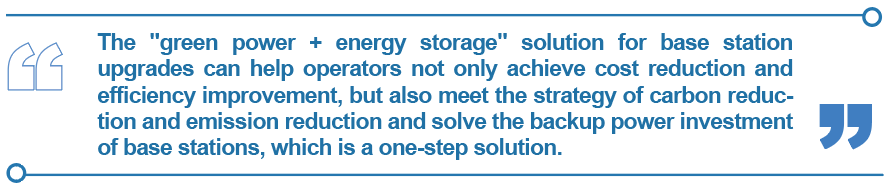
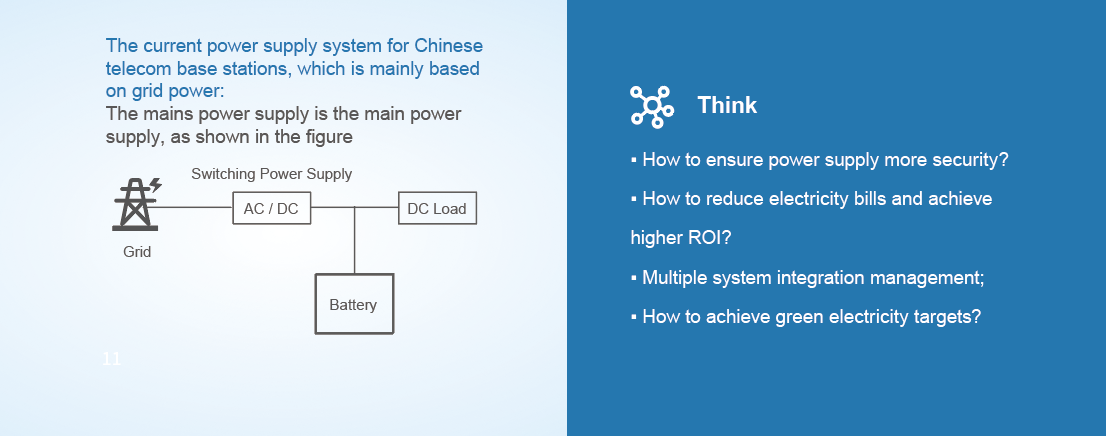
 Introduction of Energy Storage Hybrid System
▪ On the basis of the existing power supply system of the base station, a set of energy storage system is added to fully realize the storage at the cheapest time of electricity price and the release of power supply at the most expensive time of electricity price, effectively smooth the peak and valley difference of electricity consumption, and reduce the electricity bill; the details are as follows:
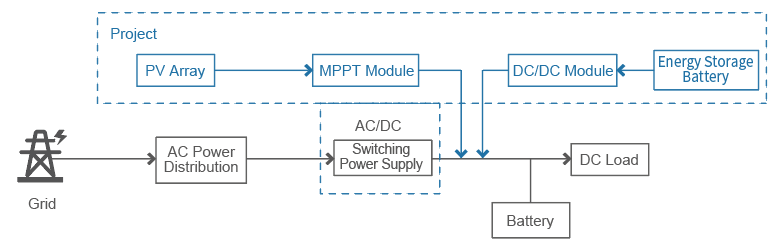
▪ The Energy Storage Hybrid System saves energy and reduces costs for base stations by charging the batteries when grid power is cheapest and discharging it during expensive peak hours. It also doubles as a backup power source, always keeping some energy in reserve for emergencies.
Principles
▪ When grid power is available, the Energy Storage Hybrid System saves energy and reduces costs for base stations by charging the batteries when grid power is cheapest and discharging it during expensive peak hours. The working logic is as follows:
- During the Peak periods, the Energy Storage Hybrid System powers the load;
- During the Average periods, the grid powers the load;
- During the Valley periods, the grid powers both the load the energy storage battery at the same time;
▪ During cloudy or rainy days or when there is a power outage, the energy storage battery can also serve as a backup power source for base stations, providing emergency power supply. In addition to meeting daily energy storage and discharge needs, it retains some capacity for backup battery purposes.
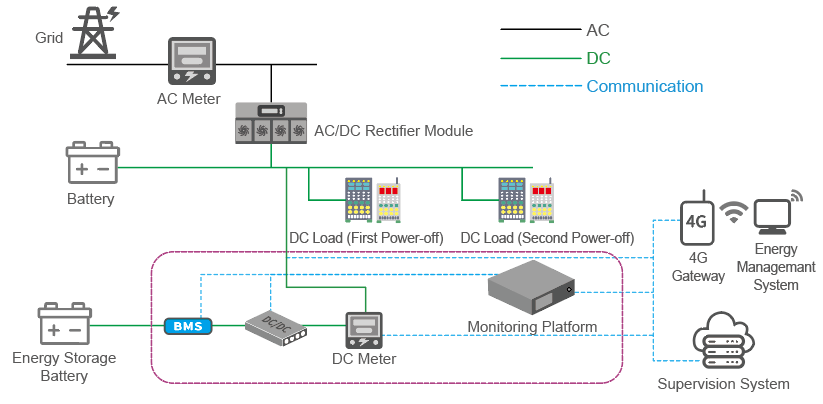
Components
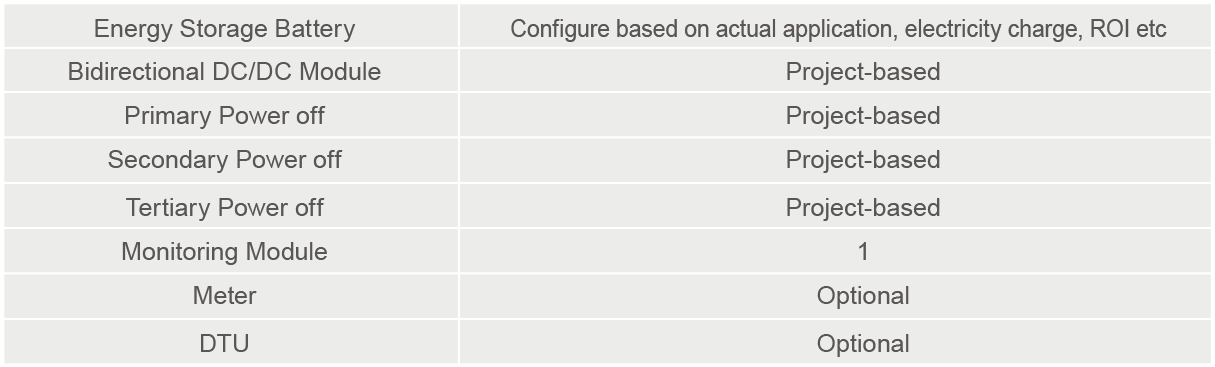
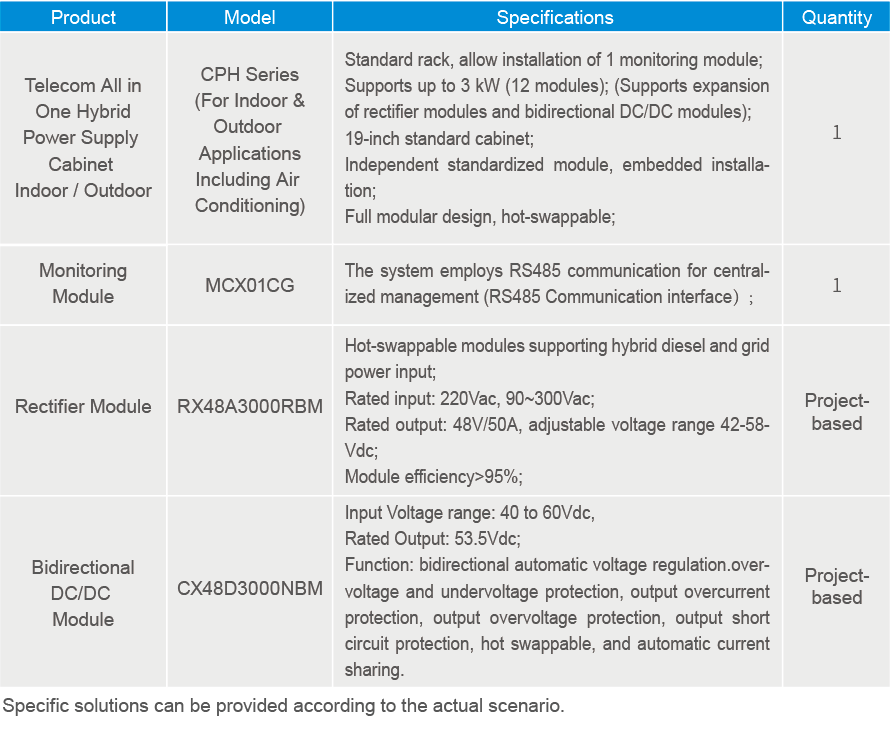
▪ Configure the DC/DC modules, monitoring module, cabinet, and energy storage capacity based on the actual load power, electricity price, and investment objectives.
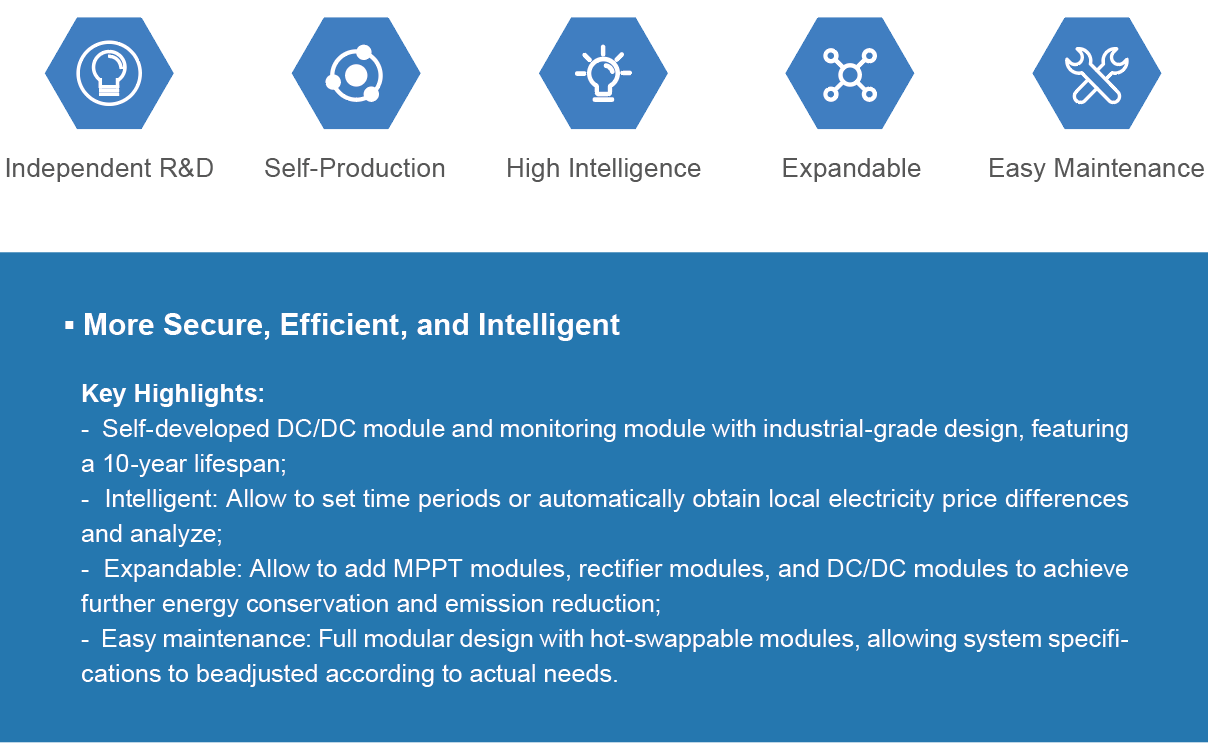
Advantages
Relevant Product: